

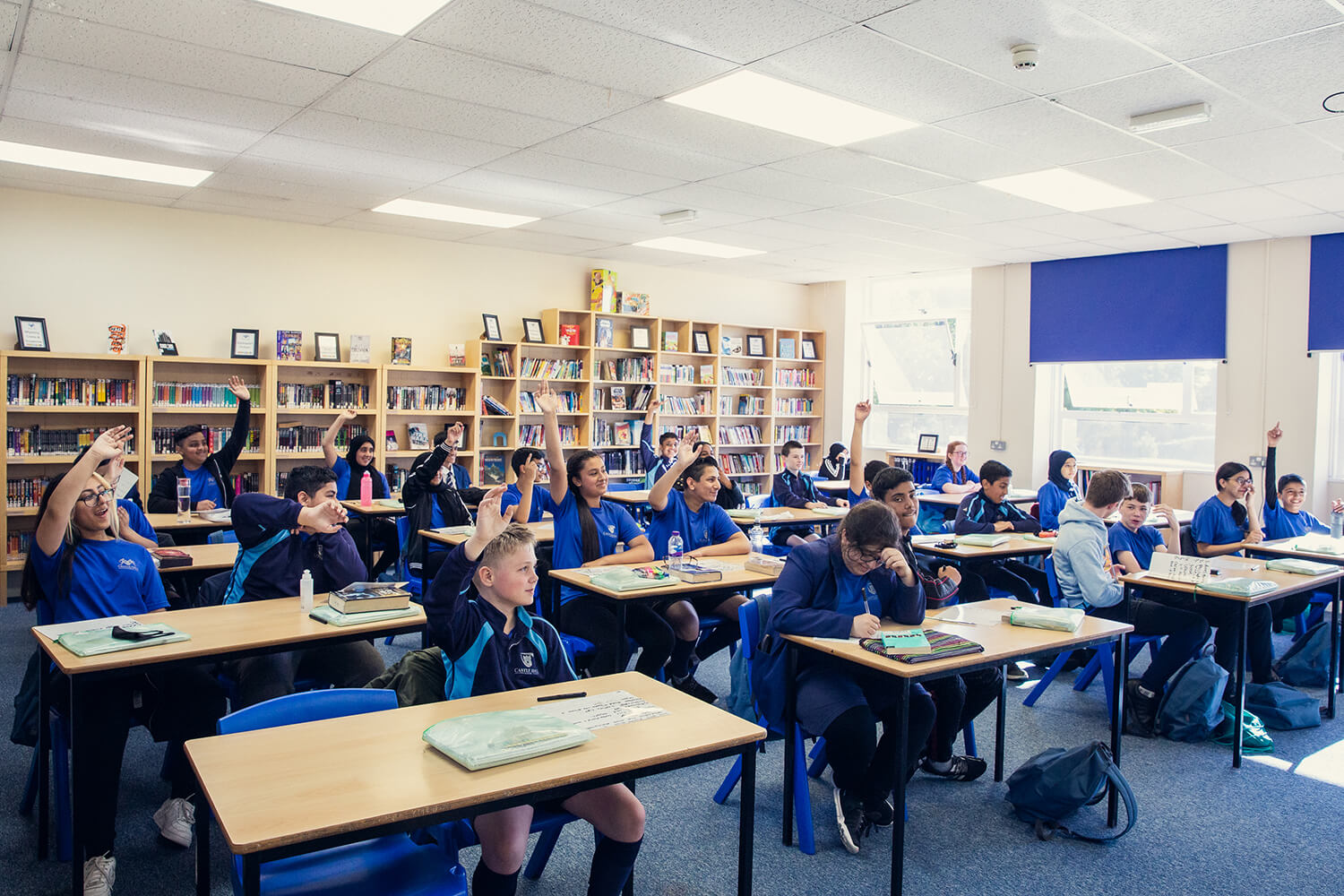
Safeguarding at Castle Hall Academy is taken very seriously and we believe that safeguarding is everybody's responsibility.
We are committed to safeguarding and promoting the welfare of children and young people and will strive to ensure:
- That the academy provides a safe environment for children and young people to learn,
- That the required systems and procedures are in place to identify children and young people who are suffering or likely to suffer significant harm,
- Will take appropriate action with the aim of making sure they are kept safe both at home and at school.
What do Designated Safeguarding Leads do?
- Respond to any safeguarding concerns
- Liaise with social care and other agencies
- Talk to parents about concerns raised where appropriate
- Update safeguarding records
- Lead and coordinate whole school training and updates
- Meet regularly with the safeguarding team and teachers to communicate relevant information
- Meet the safeguarding Governor and report to Governors
- Update the school safeguarding policy in line with Trust central team direction
- Attend local Designated Safeguarding Lead (DSL) networks and training
Encompass
The academy uses encompass notification system which has been established to support children who are resident in households where there are incidents of domestic violence and abuse. We know that children can be significantly physically or emotionally hurt by being either present in the house or directly witnessing an incident of domestic abuse.
Encompass ensure that a member of the Academy staff is trained to allow them to use the information that has been shared, in confidence, and ensure that the Academy is able to make provision for possible difficulties experienced by children, or their families, who have been involved in or witnessed a domestic violence or abuse incident.
Online Safety
We take online safety very seriously at Castle Hall Academy and appreciate you taking the time to report any issue.
What is online safety? Ofsted describes online safety as a school’s ability to protect and educate pupils and staff in their use of technology as well as having appropriate mechanisms in place to intervene and support any incident where
Social Networking – Undertsanding the different social networking tools and using them safely.
- Online Behaviour – Understanding how to interact online and behave safely.
- Digital Footprint – Understanding the impact of your online actions.
- Viruses/Hacking – Understanding what actions may leave you vulnerable to hacking or viruses.
- Online Knowledge – Understanding what to do in the event of an online issue such as cyber-bullying.
Who to talk to?
Mrs Jefferson or Mr Gittings
Safer Internet Advice Line: 0344 381 4772 – helpline@saferinternet.org.uk
O2 have set up a helpline, to answer any questions you or your child might have about staying safe online. Sometimes it’s easier to talk about a problem.
Useful Website:
- https://www.net-aware.org.uk/
- https://www.saferinternet.org.uk/advice-centre/social-media-guides
- https://www.thinkuknow.co.uk/11_18/
- https://www.nspcc.org.uk/keeping-children-safe/online-safety/virtual-reality-headsets/

Families Together
- help being a parent or carer
- emotional wellbeing and mental health support
- services for children under 5
- support and activities for children and young people
- adult learning and support for employment
- Online and Offline Threat: Child sexual exploitation (CSE) and child criminal exploitation (CCE) can occur online, offline, or through a combination of both.
- Grooming and Manipulation: Perpetrators often build trust with a child, using grooming techniques to manipulate them, even if the child believes the relationship is consensual.
- Vulnerability: While certain factors make children more vulnerable (such as care experience, learning disabilities, or trouble at home), exploitation can affect any child regardless of background.
- Long-term Impact: Exploitation can lead to profound, long-term trauma, affecting mental health, education, and safety.
- Behavioral Changes: Sudden, significant changes in mood, language, or behavior, including becoming secretive or withdrawn.
- Unexplained Possessions: Unexplained money, gifts, new clothes, or multiple mobile phones.
- Missing from Home/School: Frequently going missing or staying out late.
- New Peer Groups: Associating with older individuals or new, unknown groups.
- Online Activity: Spending excessive time online or on social media, often becoming anxious when away from their device.
- Immediate Danger: Call the police on 999 immediately.
- Non-Emergency Concerns: Contact school, your local council’s Children’s Services Safeguarding team or the NSPCC helpline on 0808 800 5000.
- Online Safety: Report online abuse to CEOP (Child Exploitation and Online Protection Command